



Which Lithium Battery Process Steps Need Thickness Measurement?
Key Points
- Lithium battery thickness measurement covers coating, calendering, separator, functional coating, slitting, and winding.
- Online non-contact thickness measurement is the “quality gatekeeper” of lithium battery lines.
- O+K XCH-6000 X-ray thickness measurement system achieves accuracy up to 0.1 μm.
- SOFT-XRAY low-radiation technology lowers deployment barriers
- Millisecond-level data feedback supports real-time thickness curves and deviation data.
Why Thickness Matters
Electrode thickness affects energy density, cycle life, and safety. If the coating is too thick, energy density drops. If it is too thin, safety risks rise.
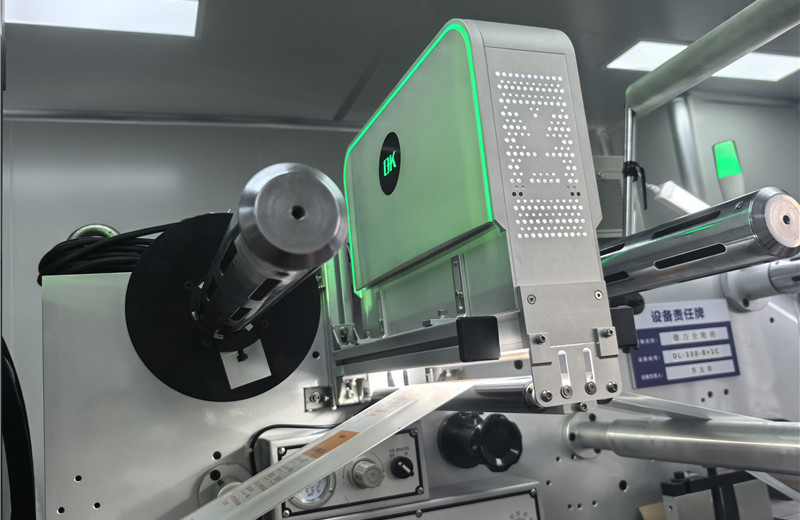
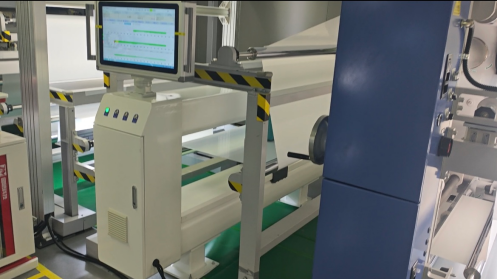
Electrodes are hard to measure: the coating is soft, the foil is thin, and the web is wide. Contact measurement can cause marks. Single-point sampling cannot represent the whole roll. That is why online non-contact thickness measurement is essential.
Where Thickness Measurement Is Needed
1. Coating
Coating applies positive and negative slurry to copper or aluminum foil. Measure electrode thickness online. Detect fluctuations. Adjust coating parameters. Electrodes that fail thickness requirements must be scrapped.
2. Calendering
After coating and drying, electrodes are compacted to reduce thickness. Calendering can damage the surface. Measure before and after calendering. Each batch should be checked at least 3 times: first-piece, in-process, and final inspection.
3. Separator and Functional Coating
The separator is the safety barrier of a lithium battery. Its thickness uniformity affects ion conduction and battery safety. Ceramic-coated functional separators need precise multi-layer thickness measurement.
4. Slitting and Winding
Slit electrode width and thickness affect winding or stacking accuracy. Uneven thickness can cause capacity inconsistency and battery cell dimension problems.
O+K X-ray Thickness Measurement System
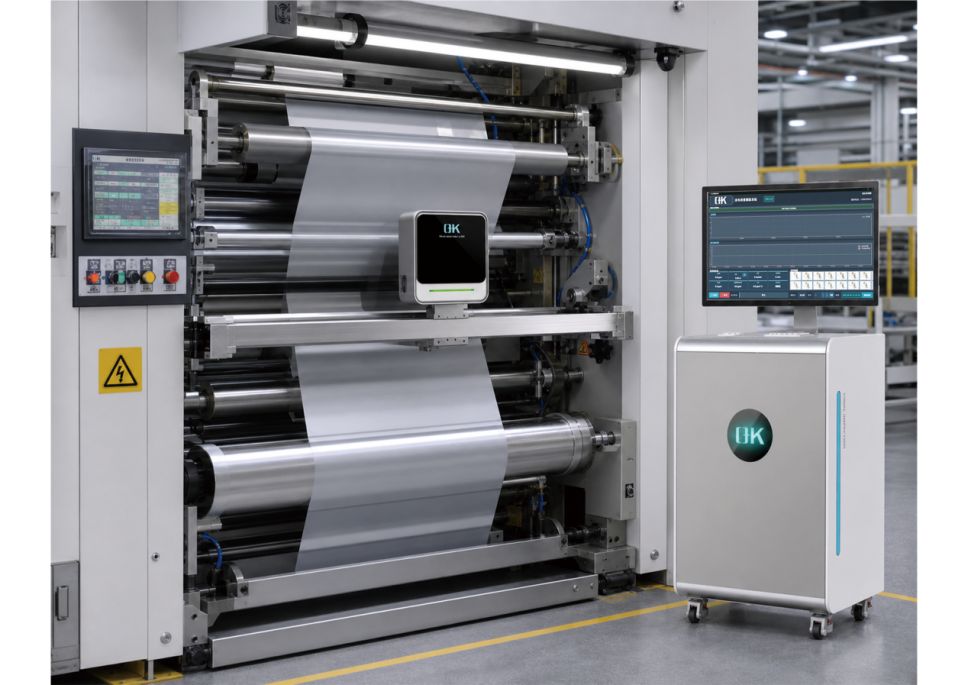
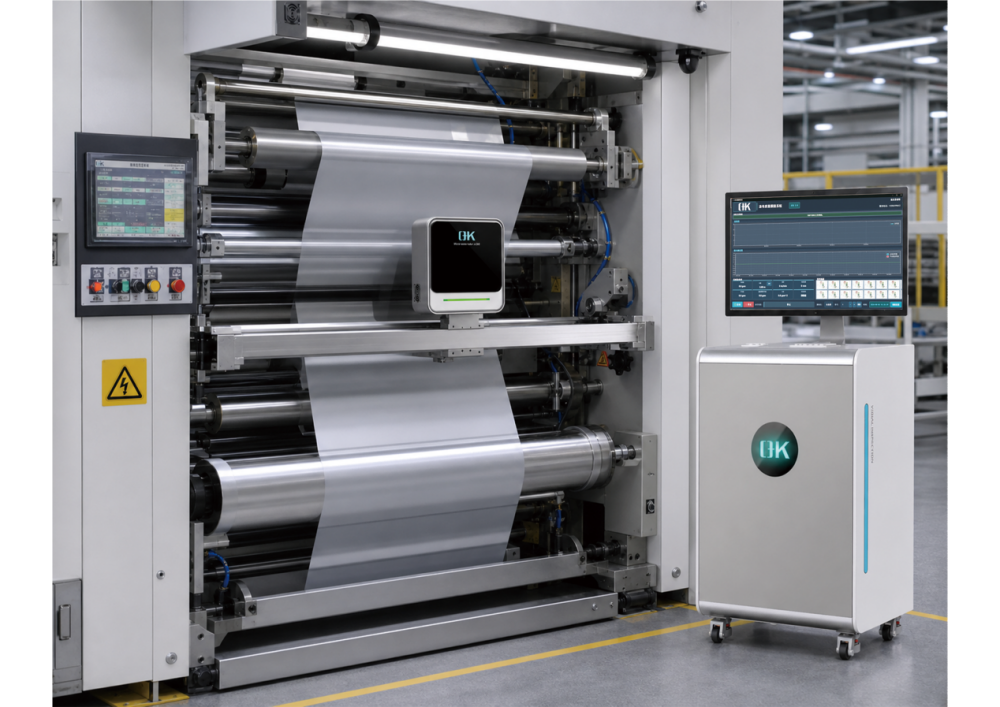
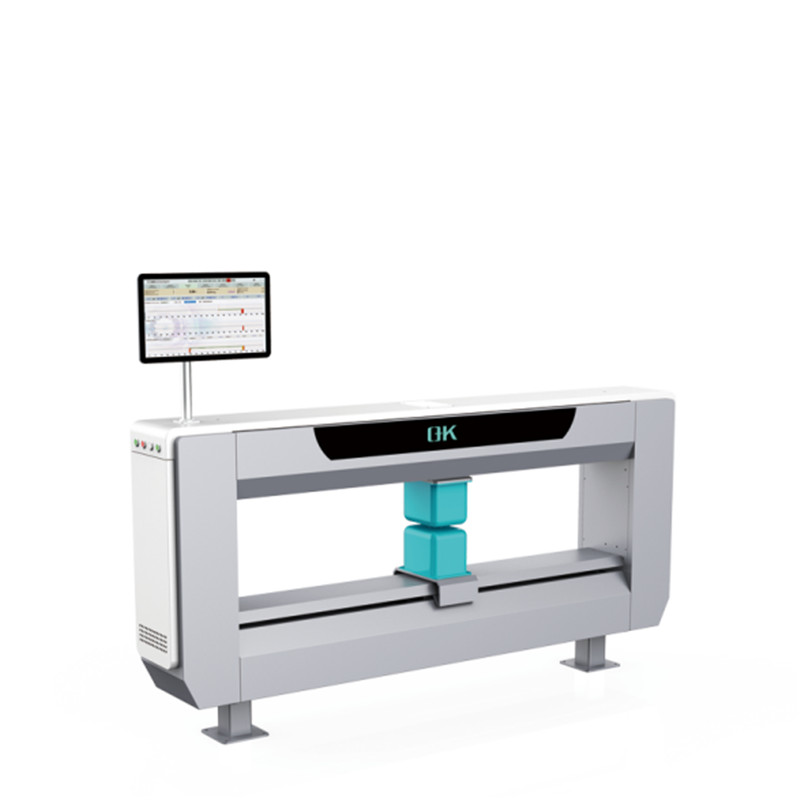
The O+K XCH-6000 X-ray thickness measurement system is designed for lithium battery lines.
- Uses X-ray attenuation to measure material thickness.
- Accuracy up to 0.1 μm.
- Non-contact inspection.
- SOFT-XRAY low-radiation technology.
- No special equipment license required.
- Millisecond-level data feedback.
- Real-time thickness curves and deviation data.
O+K serves rubber, film, printing, lithium battery, and other web industries. Its service network covers more than 150 countries and regions.
Conclusion
Thickness measurement is not optional in lithium battery R&D and mass production. A reliable online thickness measurement system protects battery quality and safety. With 25 years of web control experience, O+K helps lithium battery lines move from precise inspection to intelligent control.