
Leave Your Message
Engineered for continuous web monitoring, high line rates, and microscopic resolution across high-throughput Mexican automotive, packaging, converting, and lithium energy manufacturing lines.
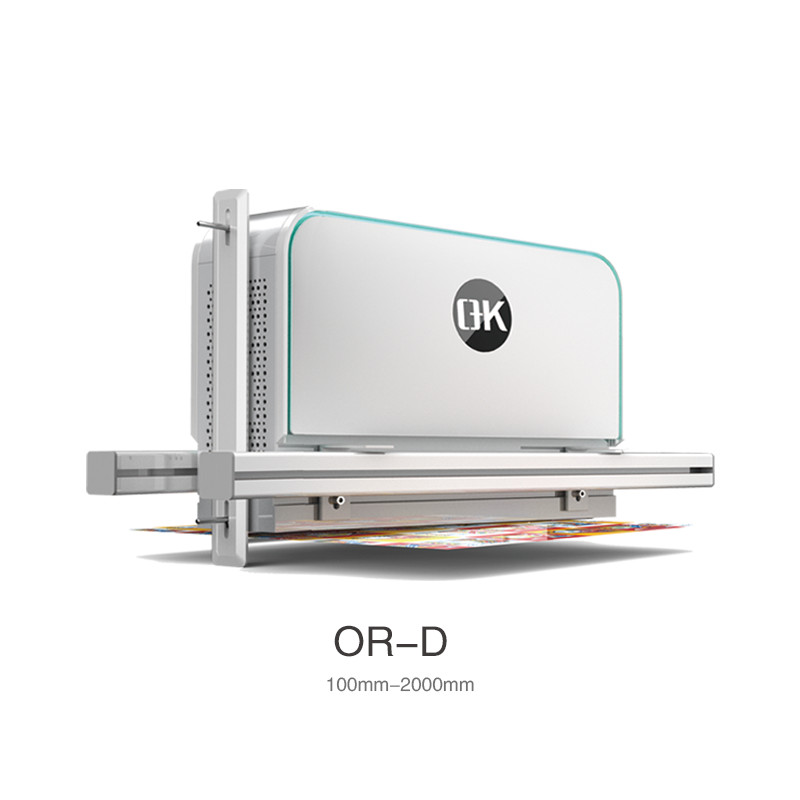
Mexico has rapidly emerged as the premier manufacturing powerhouse of the Western Hemisphere. Under the United States-Mexico-Canada Agreement (USMCA) and massive nearshoring capital influx, Mexican industrial hubs—spanning Nuevo León, Coahuila, Guanajuato, Querétaro, and Baja California—are undergoing an unprecedented transition toward Industry 4.0 automation.
Unlike traditional discrete manufacturing, Mexican assembly lines and processing mills increasingly produce continuous materials: rolled automotive sheet metal, flexible plastic films, coated battery foils, non-woven medical fabrics, and solar cell ribbons. In these continuous processes, conventional area-scan cameras suffer from frame rate limitations, optical motion blur, and geometric distortion at the edges.
Industrial line scan camera systems solve these challenges by capturing single-pixel lines at blazing speeds (up to 140 kHz line rates or higher), seamlessly reconstructing continuous 2D endless-length images without overlap or perspective distortion. This capability allows Mexican maquiladoras and multi-national factories to achieve 100% surface quality audits at production speeds surpassing 1,200 meters per minute.
On-camera FPGA hardware executes high-speed pixel correction, Flat Field Correction (FFC), and spatial filtering within microseconds, offloading processing strain from plant host servers.
Precision rotary encoder inputs ensure that line triggers match moving web speeds down to sub-millimeter encoder pulses, completely eliminating image elongation during acceleration or braking.
Continuous web quality control requires rigorous optical design, high dynamic range (HDR), and specialized illumination geometries that outshine ordinary inspection cameras.
Unlike area scan cameras that struggle with frame overlap and motion-induced smearing, linear arrays construct a smooth, unbroken image roll of endless length, vital for slitter rewinders, extruders, and corrugators.
Line scan systems only illuminate a razor-thin single line on the web. This allows ultra-high-intensity concentrated LED line lights (up to 2,500,000 Lux) to highlight surface imperfections such as micro-pinholes, creases, and orange peel.
Seamlessly interfaces with Rockwell Allen-Bradley, Siemens S7-1500, and Beckhoff PLCs prevalent in Mexican automotive and packaging plants via Profinet, EtherNet/IP, and Modbus TCP for instant defect rejection.
Our integrated neural network classifies anomalies in real time into categorical defect libraries (e.g., oil stains, foreign debris, pinholes, streaks, edge tears), reducing false alarm rates in busy factory environments.
Synchronized trigger outputs instantly communicate with pneumatic tab injectors, inkjet markers, and automatic roll-ejection machinery before contaminated materials reach subsequent converting phases.
Comprehensive installation, calibration, and training services engineered to support Mexican plant engineers, bilingual HMI operator screens (Spanish/English), and rapid spare part supply.
From the northern border maquiladoras to the vibrant Bajío industrial belt, here is how line scan camera technology safeguards zero-defect production.
Heavy stamping plants in Nuevo León and Coahuila require inspection for rolled coils before blanking. Our systems detect roll marks, scale indentations, lamination bubbles, and edge cracks at line speeds up to 900 m/min.
Converting factories serving multinational food and beverage brands deploy our 8K full-frame systems to check color shifts, misregistration, missing text, barcode clarity, and solvent streaks across wide transparent plastic webs.
Supporting clean mobility suppliers in Mexico, line scan cameras inspect continuous copper and aluminum current collector foils for coating pinholes, bare foil exposure, agglomerates, and irregular edge ceramic trimming.
Baja California is home to the largest medical device cluster in Latin America. Line scan vision inspects Tyvek lamination, blister pack sealing layers, and medical-grade films for particulates, micro-creases, and pinhole voids.
Textile mills manufacturing continuous non-wovens, geotextiles, and acoustic insulation for Volkswagen and Audi supply chains utilize linear vision to inspect fiber uniformity, thin spots, weave knots, and oil drips.
Northern electronics maquiladoras producing flexible printed circuits require ultra-fine linear inspection to verify conductor line widths, spacing, oxidation spots, and foreign matter before SMT component placement.
Chongqing ARISE Technology Co., Ltd. is a leading provider of intelligent web control solutions, headquartered near Chongqing East Railway Station in the Sichuan-Chongqing economic zone. With 25 years of experience in web control technology innovation, we are an ISO 9001-certified specialized, refined, distinctive, and innovative small giant enterprise. We hold 6 invention patents, 11 utility model patents, 26 design patents, and 18 software copyrights.
Our R&D team, with an average of over 10 years of experience, drives innovation in both hardware and software. Our products, including web guiding, tension control, and vision inspection systems, are certified by EU CE, EMC, and ISO standards, and serve industries such as printing, lithium batteries, photovoltaics, packaging, and more. With a service network spanning over 150 countries and regions, we have established long-term partnerships with many renowned companies worldwide, including progressive factories across Mexico and Latin America.
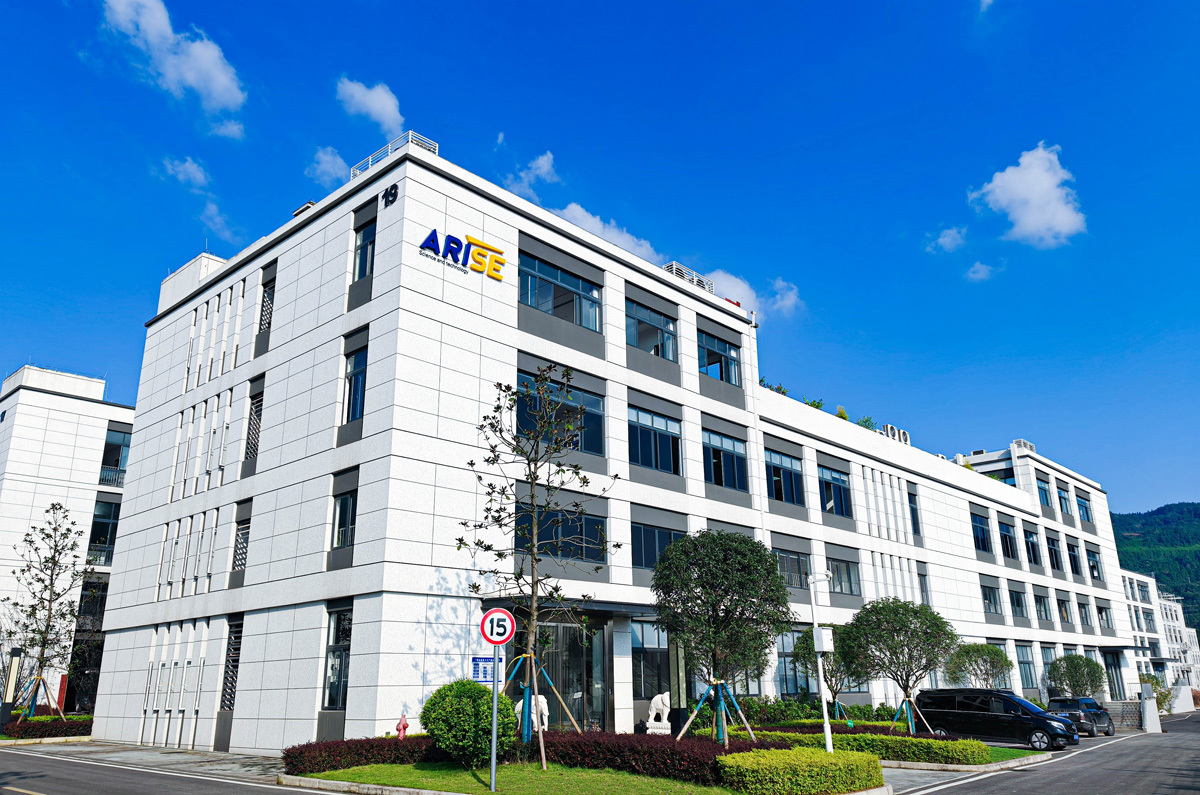
Driving continuous innovation in web control and optical inspection technology to empower intelligent globalization.
Our vision is to become the world's No.1 brand in web control technology, setting universal benchmarks for speed, accuracy, and reliability.
With a mission to continuous innovation in web control technology, supporting the globalization of intelligent manufacturing and empowering automated factories globally.
We uphold the core values of innovation, integrity, professionalism, and gratitude, and are dedicated to pursuing this vision relentlessly across all markets we serve.
When selecting line scan camera systems for Mexican plant installations, production engineers and plant managers must consider several crucial technical parameters beyond standard resolution:
1. Line Rate vs. Web Speed Calculation: The required line rate (in Hz) is defined as production speed (m/min) divided by the required spatial resolution (mm/pixel) along the travel direction. For instance, inspecting a film line running at 600 m/min with a 0.1 mm target defect resolution demands a camera sampling rate of at least 100 kHz.
2. Data Interface & Transmission Distance: In sprawling Mexican manufacturing plants, line scan cameras often sit 20 to 50 meters away from central control cabinets. While standard CameraLink has cable length limitations, CoaXPress (CXP-12) or 100GigE optical fiber interfaces provide high bandwidth and long-range signal integrity without electrical interference from heavy variable-frequency drives (VFDs).
3. Industrial Thermal Durability: Mexican regions such as Mexicali, Hermosillo, and Monterrey experience summer plant temperatures exceeding 42°C. ARISE line scan camera systems integrate specialized aviation-grade aluminum heatsinks and temperature-compensated sensor mounts to prevent thermal drift and maintain calibration stability 24/7/365.
A high-speed line scan camera system performs at its best when paired with synchronized web automation. With 25 years of proprietary innovation, ARISE delivers a unified ecosystem:
Everything you need to know about implementing line scan camera systems in Mexican manufacturing plants.
Area scan cameras expose an entire rectangular 2D sensor at once, making them prone to motion blur on fast-moving webs. Line scan cameras expose only a single line of pixels at extremely high frequencies, continuously assembling an infinite 2D image roll as the material travels beneath, with zero distortion.
Yes. Our systems natively support industrial communication protocols widespread in Mexico and North America, including EtherNet/IP (Rockwell/Allen-Bradley), Profinet (Siemens), Modbus TCP, and dry contact digital I/O for instant integration with sorting gates and alarms.
With an extensive global service network across 150+ countries, we provide prompt remote telemetry diagnostic support, bilingual (English/Spanish) HMI interfaces, detailed calibration manuals, and dedicated field engineering support for on-site commissioning across Mexico.
Our deep-learning algorithms classify surface defects including pinholes, scratches, streaks, tears, coating voids, foreign inclusions, wrinkles, edge trim variations, blister voids, and color register offsets, with custom defect library training capabilities.
Select from our complete lineup of 8K high-definition full-frame web monitoring and line array inspection systems configured for Mexico's toughest industrial manufacturing demands.